
How to wake up in the winter, when it’s still dark at 7
In December, a 6:30 alarm rings before sunrise in nearly every big US city. Turn on bright light when it rings, keep the wake time, and move bedtime earlier.

The short answer
Winter mornings are hard because a 6:30 alarm rings before sunrise in nearly every big US city (New York’s latest winter sunrise is 7:20 a.m., on Jan 4), and a small 2017 camping study in Current Biology measured the winter body’s biological night at about 14 hours. To wake up anyway, switch on bright light at the first ring, keep the wake time fixed, and move bedtime earlier.
Friday, October 30, 7:30 a.m., Detroit. You’re pulling out of the driveway with the headlights on, and the sun won’t clear the horizon until just after 8.
By the clock, these are the darkest mornings of the year, darker than Christmas. Then on Sunday the clocks fall back, and sunrise jumps an hour earlier overnight.
Enjoy it. Sunrise starts creeping later the next morning, until January.
Why is it harder to wake up in winter?
Because your body asks for a longer night in winter, and your alarm doesn’t negotiate. The clearest picture comes from a small, slightly mad experiment in Current Biology in 2017.
Researchers sent five active adults camping in Colorado for about six days near the December solstice. Outside, they got more than 13 times their usual light: about 10,300 lux, against 750 in their normal routine. They fell asleep about 2.5 hours earlier and slept 9.9 hours a night instead of 7.6. Their wake time didn’t move. (The authors give part of the credit to the cold, which kept everyone in the tent.)
Five people is a tiny sample: it shows what a winter body does when nothing gets in its way, not what yours does. If your mornings are rough all year, the cause may be somewhere else.
How deep into that night your alarm lands depends on the date, and not the way you’d guess.
When are the darkest mornings of the year?
Late October and early January, not the solstice. The November 1 fall back hands you an hour of morning light overnight: New York goes from a 7:25 sunrise to 6:26 (our fall-back guide covers that week). Then sunrise slides later daily until early January, a quirk of Earth’s orbit called the equation of time.
| Sunrise, local time | Sat, Oct 31 | Dec 21 | Latest of the winter | Mar 14, 2027 (day before) |
|---|---|---|---|---|
| Seattle | 7:52 | 7:54 | 7:57 (Dec 31) | 7:24 (6:26) |
| New York | 7:25 | 7:16 | 7:20 (Jan 4) | 7:09 (6:11) |
| Chicago | 7:21 | 7:14 | 7:18 (Jan 3) | 7:04 (6:05) |
| Detroit | 8:04 | 7:57 | 8:01 (Jan 3) | 7:46 (6:47) |
| Indianapolis | 8:12 | 8:02 | 8:06 (Jan 4) | 7:57 (6:59) |
| Los Angeles | 7:11 | 6:54 | 6:59 (Jan 7) | 7:04 (6:06) |
Times from timeanddate. Everywhere but Seattle, this Saturday’s sunrise is later than any in December or January. Detroit and Indianapolis, on the western edge of their time zone, get it worst.
Then spring forward, on March 14, 2027, throws mornings back into the dark overnight: New York jumps from 6:11 to 7:09.
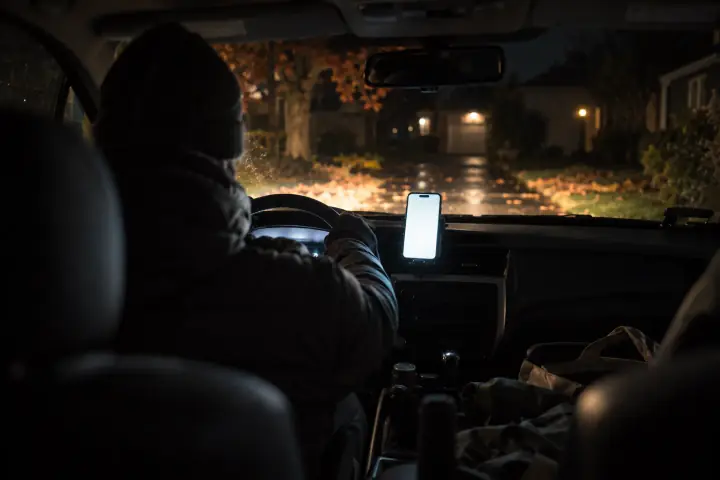
How to wake up when it’s dark outside
Make the light yourself, at the first ring, and make a lot of it. Waiting for the window won’t work: on December 21, New York isn’t light enough to see by until 6:45, and Seattle not until 7:18.
Everyday light is weak: the Colorado campers averaged about 750 lux in their normal waking hours. For seasonal depression, the National Institute of Mental Health describes light therapy as “a very bright light box (10,000 lux)” used “every day for about 30−45 minutes,” usually first thing in the morning. Your bedside lamp isn’t that. Neither is the phone screen.
So go for the brightest switch you own: every light in the room, ceiling first, the moment the alarm rings.
Then deal with the cold, half of why the duvet wins. A programmable thermostat can bump the heat up 30 minutes before the alarm. No thermostat like that? Pull tomorrow’s clothes under the covers so they’re warm when you reach for them.
Do sunrise alarm clocks help in winter?
They make the wake-up gentler, but they don’t move your body clock. In a 2010 study in Chronobiology International, volunteers spent two weeks waking to a lamp that brightened to 50 or 250 lux before the alarm, or to none. With dawn light, they complained less of morning grogginess, the thing researchers call sleep inertia. Their melatonin timing didn’t shift.
Our take: buy one for comfort, not as the fix. Even 250 lux is a fortieth of a light box, and a warm glow has never once made anyone stand up.
Hard to get out of bed in winter? Start the night before
The bigger lever is bedtime. The campers got their extra two hours by falling asleep earlier, not by waking later. Our reading: keep the alarm where it is, dim the house after dinner, and give the night back at the other end. Move bedtime in small steps; the morning person guide has a three-week method.
A made-up but typical case, not a study. Tessa, 33, teaches seventh grade in Indianapolis and sets her alarm for 6:00. On January 4 the sun rises at 8:06, two hours later. She stops waiting for daylight: ceiling light at the first ring, heat at 5:30, one lamp after 9 p.m., bedtime from 11:30 to 10:45 over two weeks. The mornings stay dark. They stop feeling like the middle of the night.
Work back from your winter alarm
Keep your wake time and count back to a bedtime with more room.
To wake up at 07:00, go to bed at:
- 21:457.5–9 hours
- 23:157.5–9 hours
- 00:45
- 02:15
Fifteen minutes is the standard default, not a fact about you. Set it to what your nights actually look like and every time above moves with it.
Treat these as targets with slack in them, not train departures. And knowing the time is the easy half: you still have to get up.
Your alarm: 07:00. Risly is the one you can't snooze through.

Is snoozing worse on dark winter mornings?
Not for your brain, but it costs time. In a 2022 study in SLEEP, 450 working adults wore wrist trackers; the 57% who snoozed didn’t sleep less and weren’t sleepier. They took about 27 minutes to get from the first alarm to out of bed, against 8.5 on single-alarm mornings. More in is snoozing bad for you.
In winter, those minutes are spent in a warm bed in a black room, where getting up is hardest. So in our view the first ring matters more in January than in June. If yours keeps losing, here’s how to stop hitting snooze.
Where Risly fits, and where it doesn’t
Risly handles one piece: getting you out from under the duvet. The alarm stops when you finish a mission, one of 13. Some put you on your feet: scan an object we pick, or make your bed. Snooze is off by default.
What it won’t do: make light or move your body clock. It’s iPhone only, so no Android. If you want winter mornings to start softly, a sunrise lamp is a better fit.
When winter mornings are more than tired mornings
If your mood sinks every winter and lifts in spring, see a doctor. NIMH describes seasonal affective disorder as “a type of depression characterized by a recurrent seasonal pattern,” more common in women and in people “living farther north.” No alarm treats that.
What to do tonight
- Look up tomorrow’s sunrise. If your alarm beats it, you need a light plan, not willpower.
- Pick the brightest switch within two steps of bed. It goes on at the first ring.
- Put tomorrow’s clothes on the nightstand, close enough to pull under the covers.
- Dim the house after 9 and go to bed 15 minutes earlier. That step is our rule of thumb, not a study’s.
Then at 6:30, the window will still be black. The room won’t be.
Waking up in winter: common questions
What is the darkest morning of the year in the US?
By the clock, the last day of daylight saving time (Oct 31 in 2026) in most cities: Indianapolis sees the sun at 8:12. After the fall back, the latest sunrise comes in early January.
Is it normal to sleep more in winter?
Your body leans that way. In a 2017 Current Biology study, five campers near the winter solstice slept 9.9 hours instead of 7.6 at home, all of it gained at bedtime. That was five people, so treat it as a direction.
How bright does morning light need to be in winter?
Much brighter than everyday light, which averaged about 750 lux over waking hours in a 2017 Colorado study. For seasonal depression, NIMH describes a 10,000-lux box for 30–45 minutes, usually first thing in the morning.
Sources
- Stothard, McHill, Depner, Birks, Moehlman, Ritchie, Guzzetti, Chinoy, LeBourgeois, Axelsson & Wright (2017). Circadian Entrainment to the Natural Light-Dark Cycle across Seasons and the Weekend. Current Biology
- Giménez, Hessels, van de Werken, de Vries, Beersma & Gordijn (2010). Effects of artificial dawn on subjective ratings of sleep inertia and dim light melatonin onset. Chronobiology International
- Mattingly, Martinez, Young, Cain & Striegel (2022). Snoozing: an examination of a common method of waking. SLEEP
- National Institute of Mental Health. Seasonal Affective Disorder
- timeanddate.com. Sunrise and sunset times, New York, January 2027
Keep reading




Ready when you are
Choose your next wake-up mission.
 iPhone · Subscription and trial terms in the App Store