
Daylight saving time ends Nov 1, 2026: how to adjust to the fall back
Daylight saving time ends at 2 a.m. on Sunday, Nov 1, 2026. Keep your alarm at the same clock time Sunday and Monday, keep mornings dim, and give it a week.
The short answer
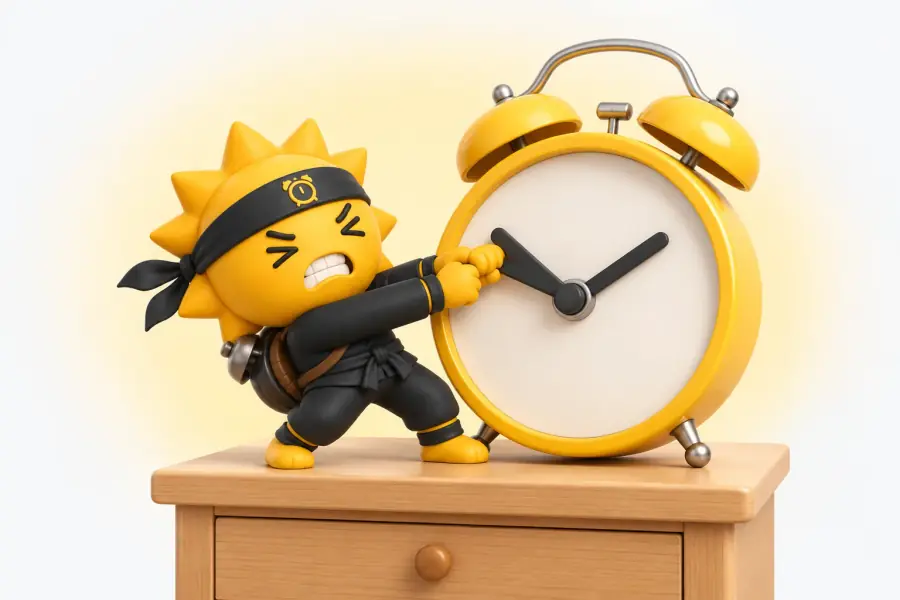
Daylight saving time ends at 2:00 a.m. on Sunday, November 1, 2026, when clocks in most of the US go back to 1:00 a.m. and that hour happens twice. To adjust, keep your alarm at the same clock time on Sunday and Monday, keep the lights low until it rings, and expect about a week, the CDC’s estimate, before your sleep settles.
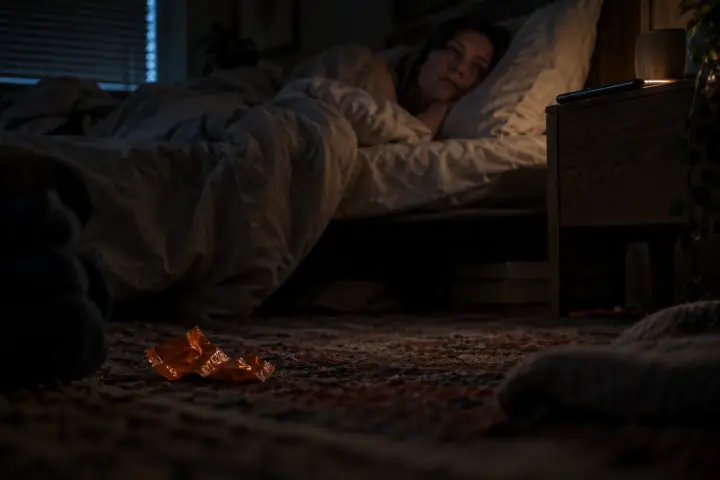
It’s Sunday, November 1, and you’re awake. Nothing woke you. The phone on the nightstand says 5:50, it’s still dark out, the candy bowl by the door is down to the flavors nobody wanted, and if you own a dog it may already be on the bed. As one dog owner on Reddit put it: "I had a pup standing in my chest and licking my face to wake up an hour earlier than normal."
Your body thinks it’s 6:50, because yesterday it would have been. What you do next, and again on Monday, decides whether this costs you one groggy morning or a whole tired week.
When is fall back 2026?
Fall back 2026 is Sunday, November 1, at 2:00 a.m. local time, when clocks go back to 1:00 a.m. That’s the earliest date the first-Sunday-in-November rule allows, so it lands on the night after Halloween, with the kids in bed late and full of sugar. Hawaii and most of Arizona don’t change, per NIST.
The House passed the Sunshine Protection Act, which would make daylight saving time permanent, on July 14, 2026, 308 to 117. As of early October the Senate hasn’t voted, so the clocks still change.
Do you really get an extra hour of sleep when the clocks fall back?
Mostly, no. Harrison reviewed the research on clock changes in Sleep Medicine Reviews in 2013 and found "little evidence of extra sleep on that night." People kept waking at their body’s hour, now an hour early by the clock, five days running: "a net loss of sleep across the week."
We plan around it anyway: asked by the AASM in 2019, 41% of 2,003 American adults said they’d spend the hour sleeping. Your body clock will move. It just needs something fixed to move toward.
How to adjust to daylight saving time fall back
Give it an anchor: keep your alarm at the same clock time on Sunday and Monday. If it’s 6:30 on weekdays, it’s 6:30 on Sunday. There are two ways to waste the hour: a Sunday lie-in, or getting up at 5:50 and switching on every light in the house.
Plenty of tip lists get the light backwards. "Get morning sun" is spring advice: morning light pulls your body clock earlier, the wrong direction this week. The AASM’s fall instruction is the opposite: "minimize light exposure until your target morning wake time."
What should you do each day around the time change?
For someone who sleeps 11 p.m. to 6:30 a.m. Our arrangement of the AASM and CDC advice, not a study protocol.
| When (our plan) | What to do | Why |
|---|---|---|
| Thu, Oct 29 and Fri, Oct 30 | Bedtime 15–20 minutes later each night | AASM pre-shift. Skip if short on sleep |
| Sun, Nov 1, before the alarm | Stay in bed, lights off, phone face down | Morning light pulls the wrong way |
| Sun, Nov 1, alarm | Same clock time as always. Then dim lights for about an hour | No lie-in. The CDC’s dim-light hour |
| Sun, Nov 1, afternoon | Get outside before sunset | Evening light moves the clock later |
| Sun night and Mon, Nov 2 | Usual clock bedtime, same alarm | You’ll yawn an hour early. Hold out |
The AASM’s one exception: if you’re already short on sleep, skip the pre-shift, because "you will benefit from getting an 'extra' hour of sleep on the night when you 'fall back' to standard time." The free hour lands in the night, not on Sunday morning.
Are you short enough to take the hour?
Enter last week’s sleep. If it shows a real debt, follow the AASM exception: skip the pre-shift and bank the hour on Saturday night.
Why Monday morning is the hard one
Sunday forgives you. Monday is where the hour gets collected.
Your body still runs an hour ahead, so it surfaces around 5:30, finds it dark, and drifts back off. The 6:30 alarm cuts into that second sleep: a recipe for sleep inertia, and the moment snooze wins. Snoozing won’t wreck your brain (we went through the research), but it moves your wake time, the one thing this week can’t absorb.
A made-up but typical case, not a study. Renata, 41, a dental hygienist in Detroit, is awake at 5:35 on Sunday and keeps the blinds down until her 6:30 alarm instead of lighting up the kitchen. Monday’s 6:30 still feels wrong, and she gets up on the first ring anyway, which is the whole game this week.
That first ring is what Risly was built for. It has no snooze button: give an alarm a mission, like scanning an object in another room, and it stops only when the mission is done. It’s iOS 26 and later only, with no Android version. The plan above works with any alarm.
Will my iPhone alarm go off after daylight saving time ends?
For a normal wake-up time, yes. Clock alarms follow the time on the phone, so a 6:30 alarm rings at 6:30 standard time, an hour later than your body expects. That rests on Settings > General > Date & Time > Set Automatically being on, per Apple’s support page. If it’s greyed out, change the clock by hand on Saturday night.
Now the honest gap. Apple doesn’t document what happens to an alarm set inside the repeated hour, 1:00 to 1:59 a.m. A developer asked exactly that on Apple’s Developer Forums in 2023 and got zero replies. We won’t guess: move anything that matters to 12:55 or 2:05. If your alarm fails on an ordinary week, see why your iPhone alarm isn’t going off.
How long does it take to adjust to daylight savings time?
About a week for most adults. The CDC’s NIOSH blog says "it can take about one week for the body to adjust the new times for sleeping, eating, and activity."
Mood can take longer. Hansen and colleagues went through 185,419 psychiatric hospital contacts in Denmark (Epidemiology, 2017) and found an 11% rise in depressive episodes after the switch to standard time, fading over about ten weeks. If the 5 p.m. dark flattens you for more than a couple of weeks, raise it with a doctor.
Kids, dogs and the night after Halloween
A parent on r/Parenting wrote that their toddler had "taken to waking up a whole hour EARLIER (4am) instead of later with DST. What is this witchery." Kids and dogs don’t watch the clock, and the Halloween late night won’t buy a lie-in. Keep their room dark until the time you want them up, and move meals later in small steps.
What to do Saturday night and Sunday morning
- Saturday evening: set the oven and the car back an hour.
- On your phone: check that Set Automatically is on.
- Before bed: move any alarm set between 1:00 and 1:59 a.m. out of that hour.
- Blinds down: so a 5:50 wake-up stays dark.
- Sunday night: usual clock bedtime. To land it on full sleep cycles, use the sleep calculator.
Then Monday the alarm rings at its usual time, your body insists it’s later, and you get up anyway. For the rest of the year’s mornings, how to stop hitting snooze picks up from here.
Daylight saving time fall back: common questions
When does daylight saving time end in 2026?
2:00 a.m. local time on Sunday, November 1, 2026. Unless the law changes, clocks spring forward again on Sunday, March 14, 2027.
Do you actually gain an hour of sleep when the clocks fall back?
Usually not. A 2013 review found little extra sleep that night and a net sleep loss over the following week.
Should I sleep in during the extra hour?
No. A lie-in removes the anchor your body clock needs. If you’re chronically short on sleep, the AASM says take the hour on Saturday night.
Will my iPhone alarm go off when daylight saving time ends?
Yes for a normal wake-up time, with Set Automatically on. Avoid 1:00 to 1:59 a.m. that night: Apple doesn’t document alarms in the repeated hour.
Sources
- NIST. Daylight Saving Time (DST)
- American Academy of Sleep Medicine. Daylight saving time (sleepeducation.org)
- American Academy of Sleep Medicine (2019). When daylight saving time ends, people plan to sleep
- Harrison (2013). The impact of daylight saving time on sleep and related behaviours. Sleep Medicine Reviews
- Hansen et al. (2017). Daylight savings time transitions and the incidence rate of unipolar depressive episodes. Epidemiology
- CDC NIOSH Science Blog (2016). Daylight saving time
- Apple Support. If you can’t change the time or time zone on your Apple device
- Apple Developer Forums (2023). Developer question on Clock alarms and DST, unanswered
- Clerk of the US House (2026). Roll Call 238, H.R. 139, Sunshine Protection Act
Keep reading




Ready when you are
Choose your next wake-up mission.